
Remembering The Wolves Of The Lake District
Do trees have memory? Perhaps the ancient trees of The Lake District remember the bear, the moose, the lynx cat and the wolf… and if they do remember, then I try to comprehend something that may have a memory that can stretch back far further than our minds can begin to measure.
There are Yew trees in Borrowdale that are estimated to be around 1,500 years old… Trying to imagine what those trees have lived through and how the landscape and wildlife has changed since they first sprouted is almost impossible.
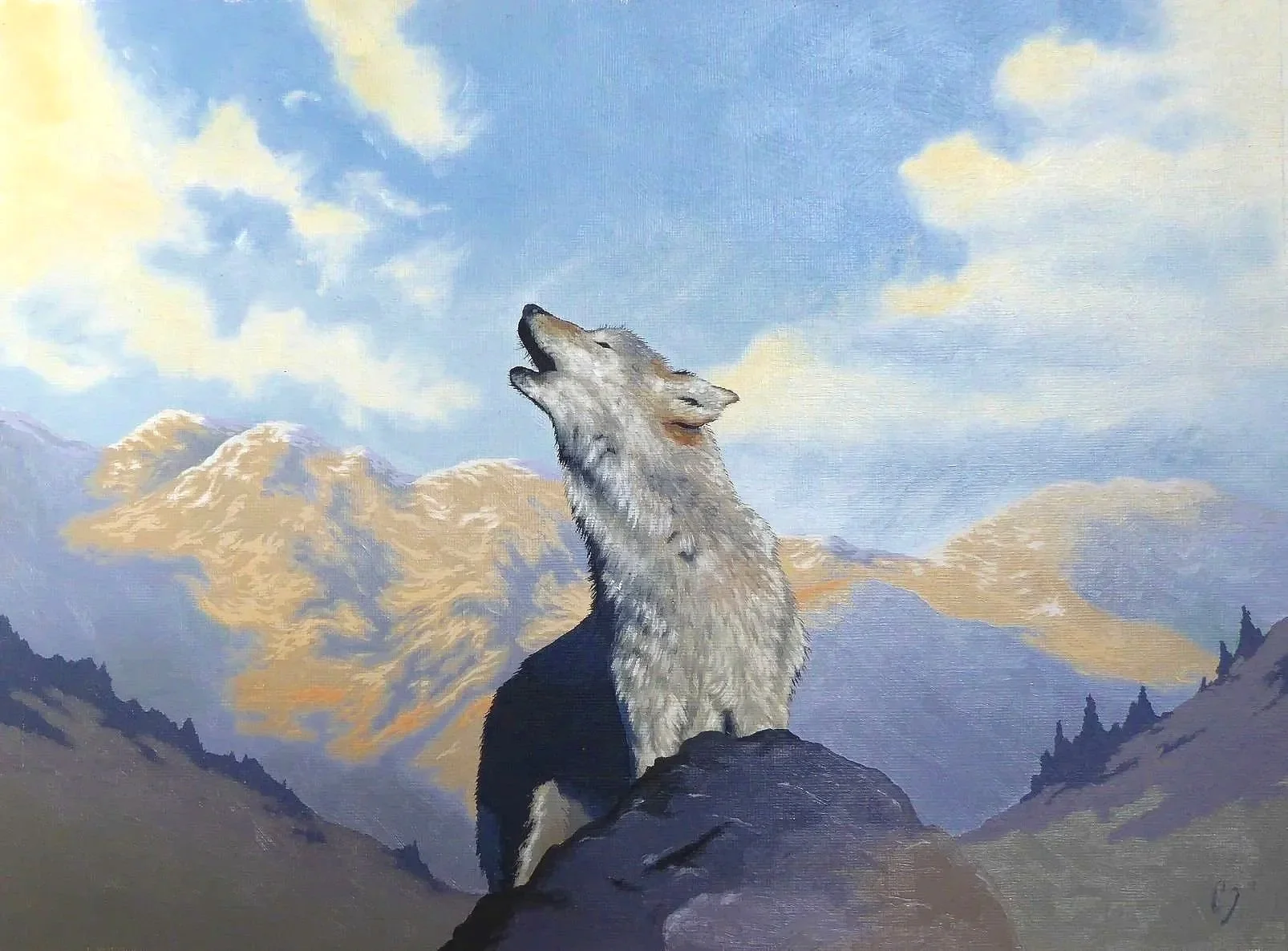
Hundreds of years ago, perhaps a wolf howled on a fell top against the backdrop of the Langdale peaks.
Created in oils by Christina Jayne
When you’re out hiking in the Lake District, crossing the path of wolves is not something one needs to worry about these days… There possibly hasn’t been a wolf in England for 500 years. Imagine what it must have been like here in the Lake District all those centuries ago… When wolves roamed the fells, perhaps tracking a herd of red deer, howling on the snowy mountain peaks, playfully rolling amongst the spring time bluebells or perhaps resting in the shadow of a broad old oak tree from the summer heat.
…In comparison, I recently travelled to Scandinavia. Walking in the countryside there felt like stepping back in time. The forests there are so ancient… then adding to that, the knowing that there is the slight possibility a wolf many have passed by minutes ago is something else. Not a feeling a native brit is used to feeling at all… but nevertheless the feeling is there, like some long forgotten instinctive and unsettling awareness that you are no longer at the top of the food chain… That a human is no match for a wolf… The wolf has the choice.
Why Are There No Wolves in Britain?
Wolves throughout history and folklore have been written as unwelcome or a dangerous threat to people and their lives, and as a result of this there are no wolves left in Britain… According to the legend the last wolf of Britain was killed in Scotland in 1743. (Though there is a great deal of speculation about that these days.) A tall-tale of a great wolf slayer called MacQueen killed wolf. He was written as a hero and likened to William Wallace. He killed the huge, black beast with his dagger and bare hands, so the story says!
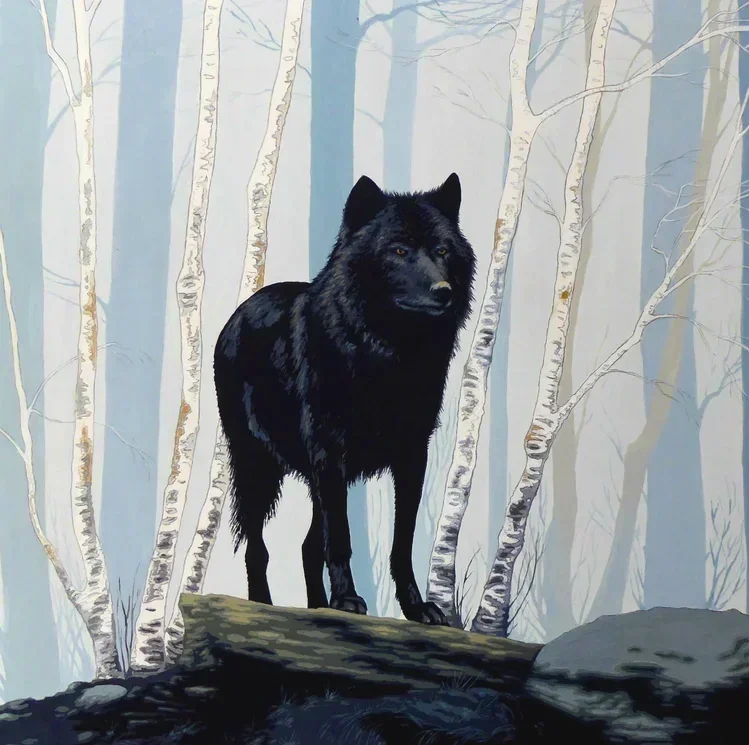
In a misty woodland of silver birch, a lone black wolf stands majestically upon a mossy stone.
Created in acrylic paints by Christina Jayne
The Lake District fells and valleys were partly sculpted by glaciers in the ice-age. I have fossil of a British wolf that is estimated to be around 20,000 years old.
I think of a time when things were very different for the wolves. Perhaps this wolf was friends with humans, perhaps a useful companion on hunts. I think about a time when wolves decided they could trust humans and we trusted them.
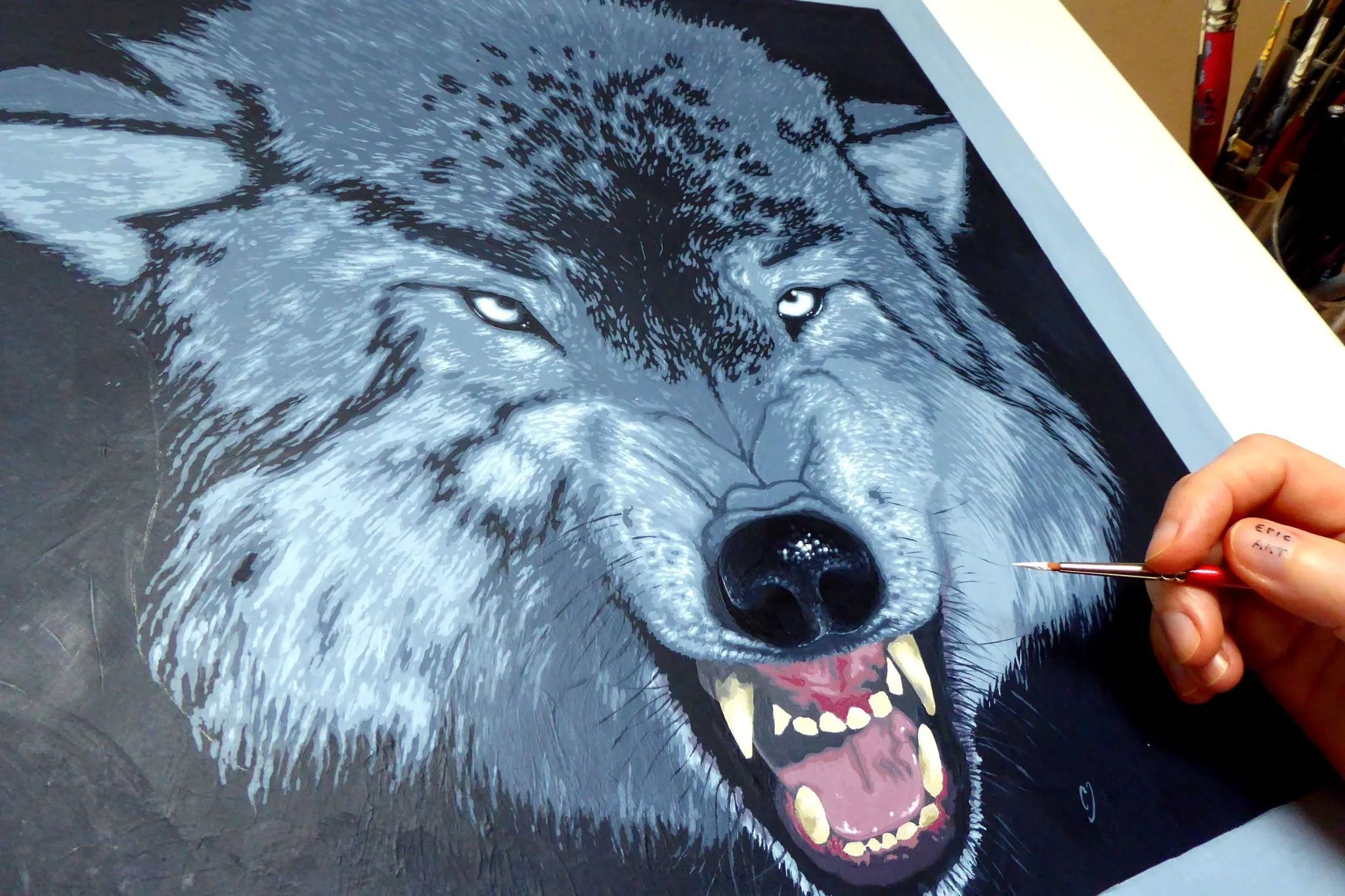
A wolf’s anger has a true purpose. He protects, he defends… he doesn’t pretend or deceive!
Created in acrylic paints by Christina Jayne
I wonder at what point in history did we begin to misunderstand wolves?… Perhaps when humans started farming and they threated our livestock?
Wolves stayed true to their wild roots and they simply didn’t fit into our new way of life, so we bred and domesticated them to fit our specific needs, and the wolves became dogs, then we bred dogs to kill the wolves…
The more I learn about wolves the more I hear about how deeply misunderstood they are, even to this day. I have read that wolves very rarely attack livestock, even less people… and there is great comparison in their attacking behaviour to dogs.
We fear them… Perhaps not just physically, but also because they remind us of our origins, the place for over 1000’s of years we have tried to separate from or control… and wolves remind us that we are not completely in control!
